Community Health Trainings – for Clinicians and Community
Learning together for healthier neighborhoods
Worry Free Community offers community health trainings Chicago partners can use to better understand equity, faith, and community engagement. These sessions bring clinicians, faith leaders, students, and residents into shared conversations that support more thoughtful care across Chicagoland.
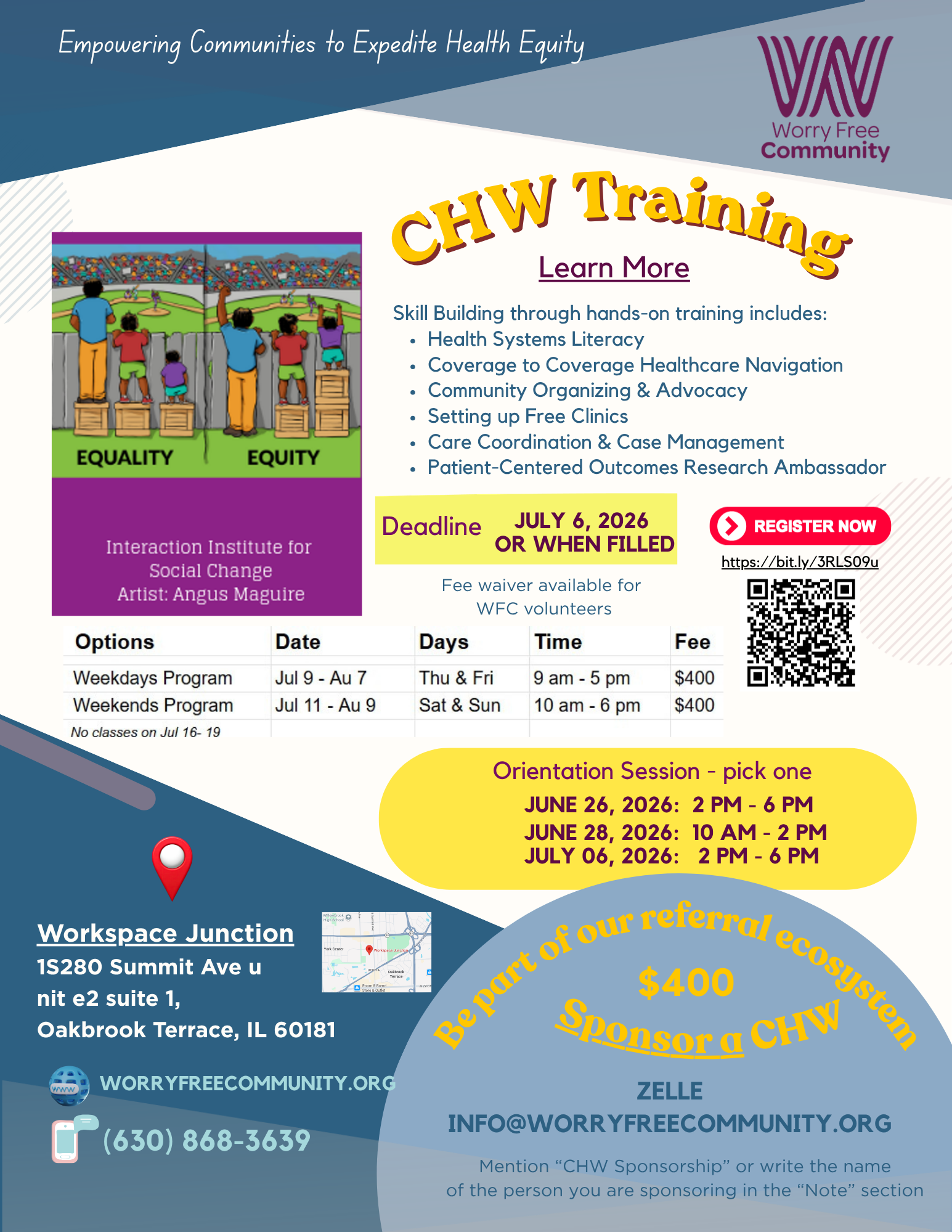

Training tracks we offer
For clinicians, care teams, and community members
Our trainings are designed with two main audiences in mind: clinical teams and community members, including emerging community health workers. Sessions for clinicians explore how to collaborate with CHWs, partner with congregations, and respond to local health concerns with humility. Trainings for residents focus on building skills in communication, navigation, and basic health education. Both tracks emphasize listening and mutual learning rather than one-way lectures. Many participants discover that community health volunteering or CHW pathways are a natural next step after training.
Training topics and formats
What we teach and how we teach it
Training topics include health equity, social drivers of health, collaboration between clinics and congregations, and practical engagement skills. Some sessions focus on understanding community data, while others center on storytelling and relationship-building. We offer in-person workshops, virtual sessions, and hybrid models so groups across the region can participate. Each training is adapted to the needs and schedules of the people in the room rather than relying on a single template. This flexibility helps community health trainings stay relevant to both busy clinicians and community members.
- Health equity and social drivers of health.
- Working with CHWs and community partners.
- Faith and health conversations in congregational settings.
- Skills for outreach, listening, and follow-up.
How training strengthens local care
Building bridges across settings
When clinicians and residents learn together, they begin to see how their roles can complement rather than compete with each other. Community members gain more language for talking with providers, and clinicians gain insight into the realities neighbors face outside the exam room. Trainings highlight practical steps for sharing information, coordinating referrals, and planning joint outreach. Over time, this reduces confusion for patients who move between clinics, community programs, and faith-based support. In this way, clinician community health training becomes a foundation for more coordinated and respectful care.
Who should attend our trainings
Health professionals, students, and faith leaders
Our sessions are open to physicians, nurses, social workers, counselors, community health workers, and students who want to deepen their understanding of community health. Faith leaders, ministry teams, and lay volunteers are also encouraged to attend, especially when they support health-related work in congregations. Researchers and program staff who design community initiatives often find value in hearing directly from residents during training discussions. We aim to create learning spaces where titles matter less than a willingness to listen and reflect. Many participants leave ready to pursue CHW certification or other longer term commitments.

Explore related pages

Next steps on your CHW journey
Moving from interest to action
Taking the first step can feel overwhelming, especially if you are juggling work, family, or school. Worry Free Community can help you map out a realistic pathway that might include short workshops, shadowing opportunities, and more formal courses over time. We encourage you to write down your goals and questions so our staff can tailor guidance to your situation. From there, we can point you toward partners who offer classes near Chicago and online learning that fits your schedule. With steady support, community health worker certification becomes a reachable path rather than a distant idea.
Questions about CHW certification
Guidance for future community health workers
What does a community health worker do day to day?
Community health workers spend much of their time listening, teaching, and connecting people to resources. They might attend clinic visits with a patient, follow up after an appointment, or help families understand coverage and social service options. In some settings, CHWs lead small group education sessions or support faith-based wellness efforts. The work looks different from place to place, but it always centers on building trust and reducing barriers to care.
Do I need a college degree to pursue CHW certification?
A college degree is not required for most CHW roles, and lived experience is often one of the most valuable qualifications. Illinois CHW certification program guidance focuses more on training hours, competencies, and supervised practice than on formal degrees. That said, some people do pair CHW work with other studies in fields such as social work or public health. Worry Free Community can help you think through what combination might fit your goals.
How long does CHW training usually take?
Training length can vary depending on the program, schedule, and whether you are completing in-person or virtual sessions. Some courses run for several months with weekly classes, while others are designed as intensive short-term programs. Practice hours and mentorship may extend the timeline, but they also deepen your skills and confidence. When we talk about CHW training Chicagoland options, we look at your current commitments so the plan feels realistic.
Can I start volunteering before I am certified?
Yes, many people begin with volunteer roles to get a feel for community health work before moving into formal training. Opportunities might include assisting at events, supporting outreach, or helping with basic navigation tasks under supervision. These experiences help you decide whether the work fits your strengths and energy. They also give you stories and skills you can bring into future training and certification efforts.
How do I learn about current CHW training opportunities?
Training options can change during the year, so staying connected to local networks is important. Worry Free Community encourages interested volunteers to visit our resources and sign up for updates about upcoming workshops or CHW-related events. We also share information from partner organizations that offer courses across the region. Reaching out to our team directly is another way to hear about opportunities that match where you live and how you hope to serve.
